Beyond Scores: Is Nebraska vs. Iowa Truly a Basketball Rivalry?
The question of whether the hardwood clashes between the Nebraska Cornhuskers and the Iowa Hawkeyes constitute a true basketball rivalry often sparks fervent debate among fans. While some point to lopsided records in certain eras, a deeper dive reveals a history of intense competition, geographical proximity, and an undeniable emotional charge that extends far beyond the final score. This isn't just about basketball; it's a narrative woven into the fabric of these two neighboring states, with roots that run as deep as a redirected riverbed.
A Border Forged in Law and Lore: The Historical Roots
To truly understand the competitive spirit between Nebraska and Iowa, one must look beyond the basketball court and into their shared, and sometimes disputed, history. A prime example is the unique story of Carter Lake. This Iowa city sits curiously west of the Missouri River, a geographical anomaly born from a dramatic act of nature. In March 1877, a powerful flood avulsed the river's course, shifting it 1.25 miles southeast and leaving an oxbow lake – Carter Lake – in its wake. What followed was extensive legal wrangling between the two states, culminating in a landmark 1892 Supreme Court ruling (
Nebraska v. Iowa, 143 U.S. 359) that declared Carter Lake belonged to Iowa, despite its new western location. This decision established an exception to the general rule of state boundaries following gradual river changes, acknowledging the abrupt "avulsion" of the river. Decades later, another boundary dispute surrounding Carter Lake found its way to the Supreme Court in 1972 (
Nebraska v. Iowa, 406 U.S. 117), further cementing the complex relationship.
This historical backdrop, marked by legal battles over territory and resources, illustrates a fundamental tension between Iowa and Nebraska that predates modern sports. It suggests that the competitive fire isn't merely a construct of athletic scheduling but an ingrained aspect of their shared identity. When states have literally fought in court over land, it's perhaps no surprise that their athletic contests carry an extra weight of significance. It's a rivalry that has been legally recognized, long before it became televised. For more on this fascinating legal history, explore
Supreme Court & Saratoga Bend: Unraveling the Iowa-Nebraska Border.
Beyond the Box Score: Defining a Modern Rivalry
The argument that "Iowa owns us" in men's basketball, implying a lack of rivalry due to perceived Hawkeye dominance, frequently surfaces among disheartened Nebraska fans. This sentiment often stems from a period where Iowa has indeed enjoyed more consistent success in men's sports. However, focusing solely on historical win-loss records provides an incomplete picture of what constitutes a true rivalry. Many storied rivalries across college sports, like Michigan vs. Michigan State football (Michigan leads 75-38) or Washington vs. Washington State in the Apple Cup (Washington leads 77-34), feature one team with a historically better record. Yet, no one would dispute their rivalry status.
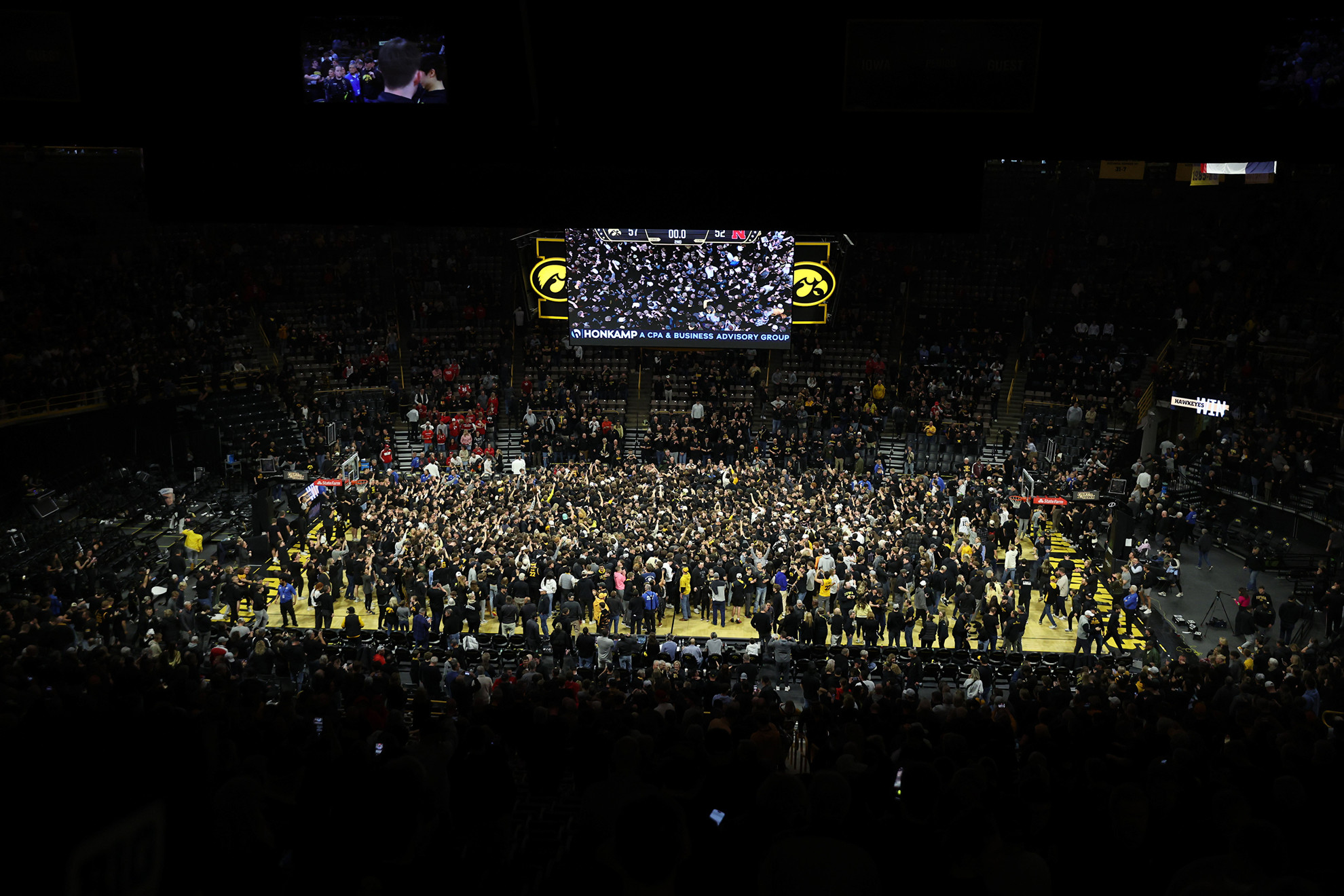
What truly defines a rivalry is the *intensity of the emotional investment* from both fanbases. The palpable animosity, the passionate declarations like "I hate Iowa," and the deep-seated desire to defeat the other team, regardless of season records, are undeniable hallmarks. Consider the sheer elation of Hawkeye fans recently when Iowa upset No. 9 Nebraska 57-52. The scenes of fans storming the court after the win against their "border rival" speak volumes. Court stormings are reserved for monumental, emotionally charged victories, not just any win against a ranked opponent. This act, fueled by pure adrenaline and the thrill of overcoming a hated opponent, serves as concrete evidence of the rivalry's vibrant existence. It’s a moment that transcends mere competition, becoming a declaration of pride and dominance. Even if one side experiences more wins, the other's fervent desire to *finally* get the upper hand, and the victor's immense satisfaction in *keeping* it, is what keeps the rivalry alive and electric.
The Intensity of the Court: Close Games, Fouls, and Fan Frustration
Basketball, by its very nature, can amplify rivalrous feelings, especially in close contests. The subjective interpretation of fouls, for instance, often becomes a flashpoint for fan frustration and fuels the narrative of perceived injustice. As one veteran basketball fan noted, "Because basketball rules, especially the 'foul' are so ambiguous that a ref can completely decide the outcome of any close game while legitimately avoiding any charges of impropriety." This perception, whether entirely accurate or not, adds a layer of grievance that intensifies the animosity in a rivalry game.
When a team’s three-pointers are "rimming out" while the opponent's "were dropping," and perceived "abysmal" officiating seems to consistently favor one side, the emotional stakes skyrocket. These moments, often condensed into the nail-biting final minutes of a game, are etched into fan memory, shaping their view of the opponent. The recent 57-52 scoreline, where Bennett Stirtz and Cooper Koch led Iowa past a highly-ranked Nebraska team, epitomizes this. A five-point margin in a rivalry game, especially one ending in a court storm, feels far more significant than a similar margin against a non-rival. Every questionable call, every missed shot, every perceived slight becomes magnified, accumulating into a reservoir of resentment that spills over into the next matchup. This intense focus on the minute details of a game, and the belief that external factors (like officiating) unfairly swayed the outcome, is a clear indicator that the game means *more* than just a win or a loss – it's a battle for bragging rights and emotional vindication.
The Stakes and Seasons: Why Every Game Matters More
In college basketball, particularly within the competitive landscape of the Big Ten, every game holds significance, but rivalry games carry an entirely different weight. For teams like Nebraska, navigating a season with fluctuating expectations – from appearing like a Final Four contender at 20-0 to settling into a potential 3-4 seed, with a floor of a 5-6 seed – a win against Iowa isn't just another notch in the win column. It's a statement. It's a chance to validate their season, to silence critics, and, perhaps most importantly, to earn bragging rights against a deeply disliked opponent.
The emotional investment from fans is incredibly high. The thought of "facing a bunch of dumbass Iowa fans that didn't even go to college acting like they're hot shit" is a raw, relatable sentiment that encapsulates the personal toll a rivalry loss can take. It’s not just about the team; it's about the fans' pride, their identity, and their daily interactions in border communities. A victory can make the week, while a loss can cast a pall. This high emotional cost, combined with the chance to impact conference standings and NCAA tournament seeding, means that
Iowa Downs No. 9 Nebraska: Court Stormed in Intense Border Rivalry isn't just a headline – it's a pivotal moment in the ongoing narrative of their contentious relationship. For both sides, these games are not just about winning; they are about *beating Iowa* or *beating Nebraska*, a subtle but crucial distinction that solidifies their rivalry status.
Conclusion
Ultimately, the argument that Nebraska vs. Iowa isn't a basketball rivalry due to perceived historical imbalances misses the core essence of what makes a rivalry truly tick. From ancient border disputes resolved by the Supreme Court to the palpable tension in every possession, the emotional fervor of the fans, and the dramatic spectacle of a court storming, the evidence strongly suggests otherwise. While win-loss records may fluctuate, the deep-seated historical context, the intense fan passion, the magnified frustrations of close games, and the elevated stakes within the season's narrative all undeniably cement Nebraska vs. Iowa as a bona fide basketball rivalry. It’s a contest where tradition, geography, and raw emotion intertwine, ensuring that every game is more than just a score – it's another chapter in a long-standing, deeply personal rivalry that continues to captivate and infuriate fans on both sides of the Missouri River.